Füge Hintergrunddetails, Markennotizen, Charakterbeschreibungen, visuellen Stil oder alles hinzu, was das Video enthalten soll.
Beginne mit einer einfachen Idee
Beschreibe deine Videoidee einfach in klaren Worten, etwa „ein kurzes Social-Video über eine Katze, die durch den Weltraum reist“. Vorla führt Einsteiger Schritt für Schritt, sodass du ohne Erfahrung im Drehbuchschreiben, Storyboarding oder Schnitt loslegen kannst.
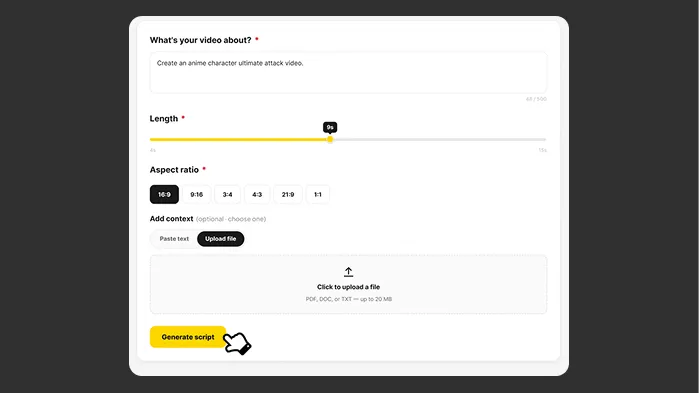
Ein Skript generieren
Vorla verwandelt deine Idee in ein poliertes, strukturiertes Videoskript mit klaren Szenen, Pacing, Erzählfluss und visueller Ausrichtung — damit du von Anfang an ein stärkeres Video erstellst.
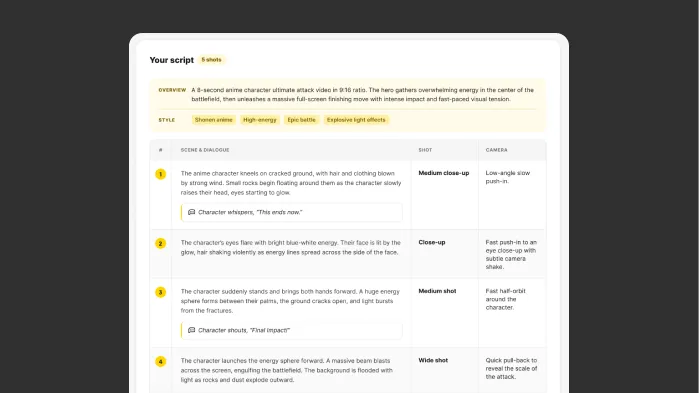
Skript in ein Storyboard verwandeln
Sobald das Skript passt, erstellt Vorla ein Szene-für-Szene-Storyboard zur Überprüfung. Bestätige das Storyboard vor der Videogenerierung, um Nacharbeit zu reduzieren, Zeit zu sparen und unnötige Produktionskosten zu vermeiden.
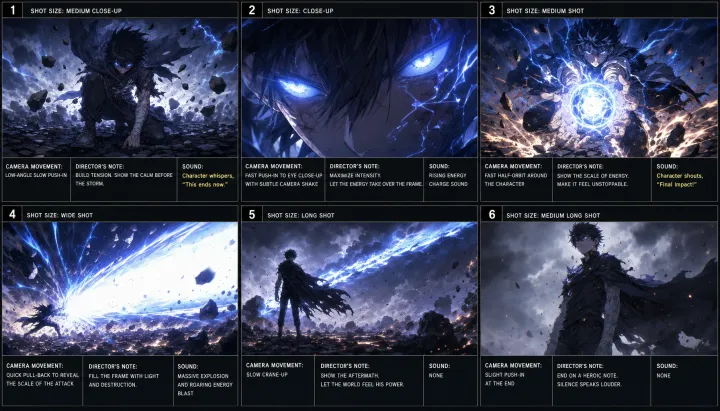
Vom Storyboard zum fertigen Video
Sobald dein Storyboard freigegeben ist, generiert Vorla das fertige AI-Video auf Basis des bestätigten Skripts und Szenenplans. Das Ergebnis ist ein polierteres, kohärenteres und hochwertigeres Video mit stärkerem Storytelling, flüssigerem visuellem Ablauf und besserer kreativer Konsistenz.
Beschreibe deine Videoidee einfach in klaren Worten, etwa „ein kurzes Social-Video über eine Katze, die durch den Weltraum reist“. Vorla führt Einsteiger Schritt für Schritt, sodass du ohne Erfahrung im Drehbuchschreiben, Storyboarding oder Schnitt loslegen kannst.
Vorla verwandelt deine Idee in ein poliertes, strukturiertes Videoskript mit klaren Szenen, Pacing, Erzählfluss und visueller Ausrichtung — damit du von Anfang an ein stärkeres Video erstellst.
Sobald das Skript passt, erstellt Vorla ein Szene-für-Szene-Storyboard zur Überprüfung. Bestätige das Storyboard vor der Videogenerierung, um Nacharbeit zu reduzieren, Zeit zu sparen und unnötige Produktionskosten zu vermeiden.
Sobald dein Storyboard freigegeben ist, generiert Vorla das fertige AI-Video auf Basis des bestätigten Skripts und Szenenplans. Das Ergebnis ist ein polierteres, kohärenteres und hochwertigeres Video mit stärkerem Storytelling, flüssigerem visuellem Ablauf und besserer kreativer Konsistenz.
Du musst kein Filmemacher sein, um ein story-getriebenes Video zu erstellen. Vorla hilft dir, von der groben Idee zu Skript, Storyboard und fertigem Video zu gelangen und verleiht deinem kreativen Konzept einen filmischeren und kohärenteren Ablauf.
Brauchst du ein Produktvideo, hast aber kein Skript, keine Shotliste und keinen Schnittplan? Vorla hilft, deine Produktidee mit geführten Skripten, Storyboards und zentralen visuellen Referenzen in ein poliertes Video zu verwandeln, das dein Produkt über alle Szenen hinweg konsistent aussehen lässt.
Neue Werbeideen zu testen sollte keinen kompletten Produktionszyklus erfordern. Vorla lässt dich ein Kampagnenkonzept zuerst in ein Skript und Storyboard verwandeln und hilft dir, die Botschaft zu schärfen, Nacharbeit zu reduzieren und bessere Werbevideos schneller zu erstellen.
Hast du eine Content-Idee, weißt aber nicht, wie du daraus ein sehenswertes Video machst? Vorla hilft dir, einen stärkeren Hook, einen klareren Erzählfluss und eine Szene-für-Szene-Ausrichtung zu schaffen, sodass deine Social-Videos geplant statt zufällig wirken.
Ein gutes Markenvideo braucht mehr als schöne Bilder — es braucht Struktur, Ton und Konsistenz. Vorla formt deine Idee zu einer klaren Geschichte und hilft, dass jede Szene dieselbe Markenbotschaft trägt, bevor das fertige Video entsteht.
Wenn eine Idee schwer zu erklären ist, reicht ein zufälliger AI-Clip nicht aus. Vorla zerlegt dein Konzept in klare Szenen und visuelle Schritte und hilft dir, Erklärvideos zu erstellen, die leichter zu verstehen, zu folgen und zu merken sind.
Keine Kenntnisse im Drehbuchschreiben, Storyboarding oder Schnitt erforderlich. Vorla verwandelt eine einfache Idee in einen geführten Erstellungsablauf und hilft Einsteigern, sicher vom Konzept zum fertigen Video zu gelangen.
Prüfe Skript und Storyboard, bevor du das fertige Video generierst. So erkennst du Probleme früh, reduzierst unnötige Überarbeitungen und vermeidest, Credits an zufällige Ergebnisse zu verschwenden.
Ein besseres Video beginnt mit einem besseren Plan. Vorla generiert das fertige Video auf Basis deines freigegebenen Skripts und Storyboards und verbessert so Erzählfluss, Szenenstruktur und den gesamten Feinschliff. Für wichtige Visuals kannst du Referenzbilder hochladen, damit zentrale Charaktere, Produkte oder Markenelemente konsistent bleiben.

Normalerweise bleibe ich schon vor dem Start hängen, weil ich eine Idee habe, aber kein Skript. Mit Vorla AI Director kann ich das grobe Konzept eintippen und bekomme ein Skript, das dem Video tatsächlich eine Struktur gibt. Es fühlt sich viel einfacher an, als alles aus einem leeren Prompt aufzubauen.

Bei Produktvideos zählt Konsistenz. Mir gefällt, dass ich wichtige Visuals mit Referenzen definieren kann, bevor ich das fertige Video erstelle. So bleibt das Produkt wiedererkennbar, statt sich von Szene zu Szene zu verändern.

Wenn ich Social-Videos erstelle, ist der schwierigste Teil, eine einfache Idee in etwas mit Hook und Fluss zu verwandeln. Vorla gibt mir einen klareren Ausgangspunkt, sodass ich weniger Zeit mit dem Umschreiben von Prompts verbringe und mehr mit der Wahl der besten Richtung.

Der Prozess fühlt sich geführter an als ein normaler AI-Videogenerator. Ich tippe nicht einfach nur einen Prompt und hoffe auf das Beste. Ich sehe das Skript, dann das Storyboard und generiere das fertige Video, sobald die Idee klar ist.

Mein Team arbeitet schnell, aber zufällige AI-Ergebnisse bremsen uns aus. Vorla hilft uns, uns zuerst auf Skript und Storyboard zu einigen, was Feedback erleichtert und verhindert, dasselbe Video immer wieder neu zu erstellen.

Bei Erklärvideos ist Klarheit alles. Vorla hilft, die Idee in Szenen zu zerlegen, sodass das fertige Video nicht nur schön ist — es macht das Konzept tatsächlich leichter verständlich.
Normalerweise bleibe ich schon vor dem Start hängen, weil ich eine Idee habe, aber kein Skript. Mit Vorla AI Director kann ich das grobe Konzept eintippen und bekomme ein Skript, das dem Video tatsächlich eine Struktur gibt. Es fühlt sich viel einfacher an, als alles aus einem leeren Prompt aufzubauen.
Bei Produktvideos zählt Konsistenz. Mir gefällt, dass ich wichtige Visuals mit Referenzen definieren kann, bevor ich das fertige Video erstelle. So bleibt das Produkt wiedererkennbar, statt sich von Szene zu Szene zu verändern.
Wenn ich Social-Videos erstelle, ist der schwierigste Teil, eine einfache Idee in etwas mit Hook und Fluss zu verwandeln. Vorla gibt mir einen klareren Ausgangspunkt, sodass ich weniger Zeit mit dem Umschreiben von Prompts verbringe und mehr mit der Wahl der besten Richtung.
Der Prozess fühlt sich geführter an als ein normaler AI-Videogenerator. Ich tippe nicht einfach nur einen Prompt und hoffe auf das Beste. Ich sehe das Skript, dann das Storyboard und generiere das fertige Video, sobald die Idee klar ist.
Mein Team arbeitet schnell, aber zufällige AI-Ergebnisse bremsen uns aus. Vorla hilft uns, uns zuerst auf Skript und Storyboard zu einigen, was Feedback erleichtert und verhindert, dasselbe Video immer wieder neu zu erstellen.
Bei Erklärvideos ist Klarheit alles. Vorla hilft, die Idee in Szenen zu zerlegen, sodass das fertige Video nicht nur schön ist — es macht das Konzept tatsächlich leichter verständlich.

Der Storyboard-Schritt hat mich überzeugt. Ich möchte keine Credits ausgeben, nur um dann festzustellen, dass die Szenen daneben liegen. Den Ablauf zuerst prüfen zu können, macht den gesamten Prozess vorhersehbarer und deutlich stressfreier.

Ich bin kein Videoeditor, deshalb wirken Tools, die von mir Wissen über Einstellungen, Pacing und Szenenstruktur erwarten, einschüchternd. Vorla zerlegt den Prozess in Schritte, denen ich tatsächlich folgen kann, von der Idee über Skript und Storyboard bis zum Video.

Ich nutze es für Werbekonzepte, weil ich die Botschaft prüfen kann, bevor ich das Video generiere. Wenn sich das Skript oder Storyboard nicht richtig anfühlt, kann ich die Richtung früh korrigieren, statt Zeit an ein fertiges Video zu verschwenden, das am Punkt vorbeigeht.

Ich nutze es gerne für Markengeschichten, weil sich das Video bewusster anfühlt. Das Skript hilft, die Botschaft zu ordnen, und das Storyboard hilft mir zu sehen, ob die Szenen die Geschichte tatsächlich tragen, bevor ich etwas generiere.

Ich habe es mit einer Kurzfilmidee getestet, und der größte Vorteil war, dass ich nicht jede Szene selbst ausarbeiten musste. Das Storyboard ließ das Konzept vor dem fertigen Video real wirken, was mir half, Stimmung und Pacing zu verfeinern.

Am meisten schätze ich die Kontrolle. Ich kann einfach starten, jeden wichtigen Schritt prüfen und bei Bedarf zentrale Visuals definieren. Das Endergebnis wirkt polierter, weil das Video aus einem Plan aufgebaut ist und nicht nur aus einem einzelnen Prompt.
Der Storyboard-Schritt hat mich überzeugt. Ich möchte keine Credits ausgeben, nur um dann festzustellen, dass die Szenen daneben liegen. Den Ablauf zuerst prüfen zu können, macht den gesamten Prozess vorhersehbarer und deutlich stressfreier.
Ich bin kein Videoeditor, deshalb wirken Tools, die von mir Wissen über Einstellungen, Pacing und Szenenstruktur erwarten, einschüchternd. Vorla zerlegt den Prozess in Schritte, denen ich tatsächlich folgen kann, von der Idee über Skript und Storyboard bis zum Video.
Ich nutze es für Werbekonzepte, weil ich die Botschaft prüfen kann, bevor ich das Video generiere. Wenn sich das Skript oder Storyboard nicht richtig anfühlt, kann ich die Richtung früh korrigieren, statt Zeit an ein fertiges Video zu verschwenden, das am Punkt vorbeigeht.
Ich nutze es gerne für Markengeschichten, weil sich das Video bewusster anfühlt. Das Skript hilft, die Botschaft zu ordnen, und das Storyboard hilft mir zu sehen, ob die Szenen die Geschichte tatsächlich tragen, bevor ich etwas generiere.
Ich habe es mit einer Kurzfilmidee getestet, und der größte Vorteil war, dass ich nicht jede Szene selbst ausarbeiten musste. Das Storyboard ließ das Konzept vor dem fertigen Video real wirken, was mir half, Stimmung und Pacing zu verfeinern.
Am meisten schätze ich die Kontrolle. Ich kann einfach starten, jeden wichtigen Schritt prüfen und bei Bedarf zentrale Visuals definieren. Das Endergebnis wirkt polierter, weil das Video aus einem Plan aufgebaut ist und nicht nur aus einem einzelnen Prompt.